





 by Chuck Ness
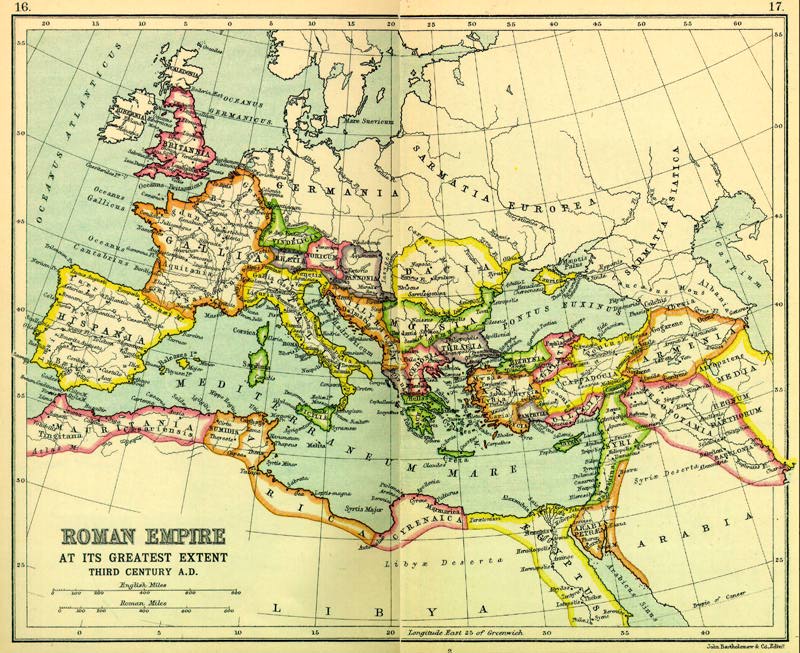
Of the seven churches addressed by John, the fourth church, Thyatira, is the smallest. Yet it received the longest message. (Rev 2:18-29) This corrupt church was located 42 miles inland from the Aegean Sea in an alluvial plain between the Hermus and Calcius rivers . There were no natural geographical formations like steep mountains or deep rivers to provide it with a good base from which to defend its position. Its sole purpose was to act as the first line of defense in front of a hostile advancing army and to hinder their movement while the kingdom’s main forces were mustered deeper behind the battlefront.
The history of thyatira consists of being controlled by the leading powers of the time, whether it was Alexander’s Greece, the Pergamon Kingdom, Antiochene empire, or the Roman Empire. Because it was so easily overrun, for most of it’s history it remained a relatively small city compared to that of Ephesus and Pergamum. However, after Rome introduced Pax Romana, it settled into becoming a fairly peacefull city that boasted more trade guilds than in any other Asian city of its time.
As in the rest of the Asian province, guilds, or trade unions, would often hold banquets for its members. These banquets included the eating of food offered to idols and the participation in immoral sexual acts. Coming to Christ meant the loss of their livelihood and financial resources for the Church if they abstained from the communal feasts. However, participation would be tantamount to renouncing the very faith they had come to accept, thus denying the One who suffered and died for them. A prophetess named Jezebel, managed to work out a theology that allowed them to compromise their faith in Christ with continued participation in the local trade unions, and that meant continued financial prosperity and material wealth.
In the Old Testament, Jezebel was the wife of King Ahab, who became a puppet in her hands for working all wickedness in the sight of Jehovah (1Kings 21:25). She established the Phoenician idolatry on a grand scale at her husband’s court, maintaining at her table 450 prophets of Baal and 400 of Astarte (1Kings 16:31-32, 1Kings 18:19, 1Kings 18:13). Since that time, the name Jezebel has been known in history as the representative of all that is designing, crafty, malicious, revengeful, cruel, and immoral. We do not know if this prophetess’s real name was Jezebel or if Christ used the name as a description for the type of woman she was. What we do know is that this Jezebel was very influential in leading members of the church into immoral practices with the above mentioned guilds for various pagan gods.
When people deliberately reject the Lord’s authority, He is no longer their God. The result is that they must find another god, for it’s impossible for the human spirit to live without something to live for. That is the very root of what a god is. That which you worship and live for, that which makes living worthwhile to you, becomes your god. It could be the god of entertainment, like sports, video games, and television, or the god of sexual pleasure, the god of money and wealth, or even the god of ambition that one worships trying to attain fame and fortune.
I gave her time to repent of her sexual immorality, and she did not repent. Indeed I will cast her into a sickbed, and those who commit adultery with her into great tribulation, unless they repent of their deeds. I will kill her children with death, and all the churches shall know that I am He who searches the minds and hearts. (Rev 2:21-23)
Because Jezebel did not repent of her evils, Christ warns of a certain punishment for her by using a strong Hebraic term that means to “kill” with a most sure and awful form of death. There is also a punishment for those who either commit sins with her, or are led into the same kind of lifestyle if they refuse to repent. As for the words “children” used in verse 23, there is a debate as to whether the words are to be taken literally or figuratively. The word itself could be interpreted either way and there is nothing in the context, nor in the original language, that can be correctly determined. I must also point out that there is precedence to show that other passages in the Scriptures have both literal and figurative meaning, a prime example would be these letters to the seven churches.
Now if the word “children” is to be taken literally, it is in accordance with what is often threatened in the Scriptures, that children shall be visited with calamity for the sin’s of their parents. This is not to say that I believe in generational curses, but the very actions of parents do affect the lives of their children. Children of alcoholic or drug addicted parents would be an excellent example of this, because it is not uncommon for whole families to suffer from a parent’s neglect due to their addictions. The other side of this debate comes from the understanding that the use of the word “children” is to be taken figuratively.
Prophetically, Thyatira represents the church age from about the 6th to the 16th century, a thousand years that I like to refer to as the “The Devil’s Millennium”. It was a time when the church became corrupt by combining pagan rites and Christian teaching. Many heathen rituals were introduced into the churches that in time were accepted as being Biblical. These practices included the worshiping of images, the selling of indulgences to buy ones way out of hell, and various other practices of the priests which were unknown to the early church but gained approval during the devil’s millennium. In time it became difficult to distinguish the clergy from the corrupt monarchs, as political power by religious authorities was widely sought. Like the church of Thyatira this age was truly corrupt and dark, as the Light did not burn very bright. Thus we have the term that aptly describes this time, at least the first 500 years or so, as the “Dark Ages”.
The range of praise regarding Thyatira’s spiritual status was perhaps the widest given to any of the seven churches, and it is also the only church that is said to have improved its spiritual condition. However, all the good works were being overshadowed by their inability to smell the stench coming from the practices of those who were corupting it from within. So while Christ did give praise for their love, faith, service, and perseverance, because they did not repent He eventually removed their lampstand.
I pray that those who have ears to hear, will hear His voice and call upon the name of the Lord Jesus Christ.
Amen








Leave a Reply